

Eco Friendly Ganpati 2025 is the perfect time to rethink how we celebrate. You might think festivals and zero-waste are impossible bedfellows. But what if I told you that my family has celebrated (Eco Friendly Ganpati 2025 Ganesh Chaturthi with zero waste for 10 years—and we’re just getting started? It’s true! From clay idols to dhoop cones, here’s how I do it—and how you can, too.
1. Why Eco Friendly Ganpati 2025 Must Address the Waste Crisis
Let’s talk numbers. In Metro cities like Mumbai, about 150,000 Ganpati idols are immersed each year—and that’s just one city! During the first 1.5 days of 2025 immersion alone, 60,177 idols were submerged—but this time, all in artificial ponds, not rivers—marking a clear shift toward eco-friendly options. In Bengaluru, 300,000 idols were immersed in just two days—now that’s a lot of clay (or PoP) going into our water bodies. And in cities like Pune, nearly 450,000 idols are immersed over a 10-day period—leading to significant pollution.
2. The Hidden Polluters Harming Our Eco Friendly Ganpati 2025
Let’s be honest—Plaster of Paris (PoP) idols are still widespread, despite being toxic and non‑biodegradable. These idols leach chemicals into rivers, harming aquatic life and poisoning drinking water. Mumbai shows promise—with 60,177 idols immersed in artificial ponds, nearly half of them eco‑friendly, not oversized PoP ones. That’s a sign things are moving in the right direction—but cultural habits still need an extra push.
3. Infrastructure for the Win: Artificial Ponds & Cleanup Crews
Mumbai’s civic body (BMC) raised the bar. For 2025, they built 288 artificial ponds—up from 204 the previous year—to address early immersion surges. They issued an SOP for the timely retrieval of idols, even PoP ones, within 24 hours, tracking data per ward. The result? On the fifth day, only 17,106 idols were immersed—down from 38,717 last year. That’s progress, folks.
4. Creative Alternatives: Clay, Seeds & Zero-Waste Rituals
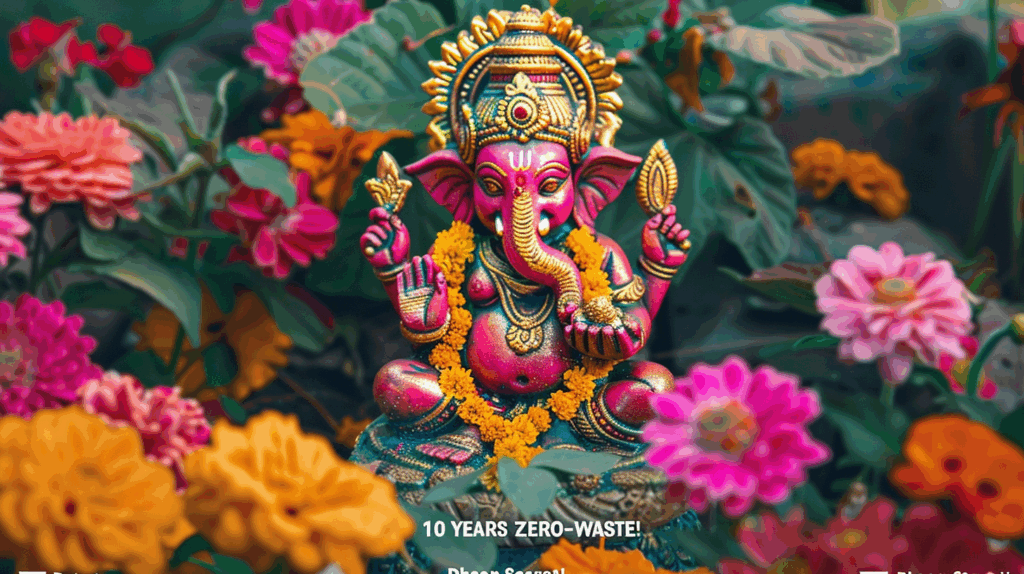
So, what’s the eco‑friendly alternative to PoP idols? Clay, of course! We use mitti ka Ganapati, a completely biodegradable product. After the visarjan at home, I sow dhania or tulsi seeds in the same mud. Soon, green shoots pop up—literally giving life where the idol once stood.
My dried flowers become dhoop cones—fragrant, zero‑waste, and a sweet goodbye from Bappa himself. It’s not just a ritual—it’s a cycle of life.
Read More: The Vibrant Monsoon Festivals of India: All You Should Know
5. The Power of One—And Community Ripples
Why one family’s decade‑long zero‑waste festival matters? Because one person’s green choices can spark broader, more lasting change. Think of modest habits becoming collective shifts. More clay idols, more eco-conscious homes, and greater community awareness.
In Coimbatore and Chennai, despite guidelines, PoP idols continue to appear in large numbers—over 2,000 idols in natural water bodies. However, pockets of change exist: Chennai now sees some devotees opting for clay and even straw décor.
6. Did You Know? Solid Waste Stats from Mumbai
Want cold, hard data? After the 2024 visarjan, BMC recovered a staggering 363 metric tonnes of solid waste and 550 metric tonnes of flower offerings from beaches and artificial ponds. These flowers didn’t go to waste—they became organic fertilizer for city gardens. Now that’s a zero-waste win.
7. Your Easy Eco-Ganpati Checklist
Here’s your simple list to make this festival greener and more meaningful:
| Step | What to Do |
|---|---|
| 1. Choose clay or seed-infused idols | Biodegradable, guilt-free, and home-friendly |
| 2. Decorate naturally | Use cloth scraps, homegrown flowers, dried leaves |
| 3. Do a mini home visarjan | Skip the river—use buckets or tubs and reuse the water |
| 4. Sow seeds after visarjan | Tulsi, dhania, basil—ideals that sprout hope |
| 5. Support local eco-initiatives | Join workshops or encourage eco idol makers |
| 6. Spread the word | Your green steps might spark a festival-wide shift |
Bringing It Home: Why Your Tiny Step Giants
Festivals like Ganesh Chaturthi are about beginnings—and what could be more fitting than a green beginning? When clay idols dissolve into soil, when dried flowers perfume your home as dhoop cones, when a seed sprouts after being sown—it’s not just poetic. It’s proof: tradition and sustainability can mesh.
Let’s shift from one-day immersion to year-long impact. Your mini green rituals matter. They matter to rivers, to soil, to future festivals. They matter to Mother Earth.
Ganpati Bappa Morya—may His journey be clean, simple, and sustainably beautiful.
Frequently Asked Questions (FAQs)
Further Reading
If you’d like to explore more about eco-friendly Ganesh Chaturthi celebrations, idol immersions, and waste management in India, here are some trusted sources:
- Indian Express – Half of Ganesh idols immersed in artificial ponds in Mumbai (2025)
- Times of India – Day-wise Ganpati idol immersion data across cities
- Hindustan Times – Nirmalya (flower offerings) collected and composted in Pune
- Indian Express – Waste collected after Ganesh idol immersion in Mumbai
- Times of India – Concerns over PoP idol immersions in Coimbatore