

I need to tell you something about the first time I did a proper digital detox in Kerala. I lasted four hours before I checked my phone. This guide covers everything you need to know about Kerala wellness retreat.
Your Complete Kerala Wellness Retreat Guide
Not four days. Four hours. I had checked into a beautiful Ayurvedic retreat near Varkala, handed over my phone at reception with what I felt was admirable serenity, walked to my room, sat on the verandah looking at the coconut trees for approximately forty minutes, and then walked back to reception and asked for my phone back because I had remembered an email I needed to respond to. The email could have waited three weeks. It took me another two trips to Kerala to understand that.
I am telling you this not because it is flattering — it is not — but because I suspect it is more honest than most wellness travel writing, which tends to describe the retreat experience in the language of immediate transformation and deep peace without acknowledging the part where you spend the first two days climbing the walls of your own mind.
Kerala has been my place of return for wellness and reset more times than I can count now. I have been to Ayurvedic retreats in Thrissur, backwater homestays in Alleppey, yoga ashrams in Varkala and tea estate bungalows in Munnar. I have done it badly (the four-hour phone incident) and I have done it well. I have written fourteen books and broken a world record and travelled to 4+ countries, and the question of how to rest — really rest, not just be on holiday — is one I have had to learn over many years and several trips to this particular state.
This is what I have learned. And this is where to go to learn it yourself.
“Kerala does not offer you wellness as a product. It offers it as a way of being — one that the land, the food, the water and the people have been practising for a very long time.” — Shivi Goyal
Why Kerala Does Wellness Better Than Anywhere Else in India
Kerala is not the only place in India where you can find Ayurveda, yoga and wellness retreats. But it is the place where these things are not imports or additions — they are native to the culture in a way that makes a real difference to the quality of what you experience.
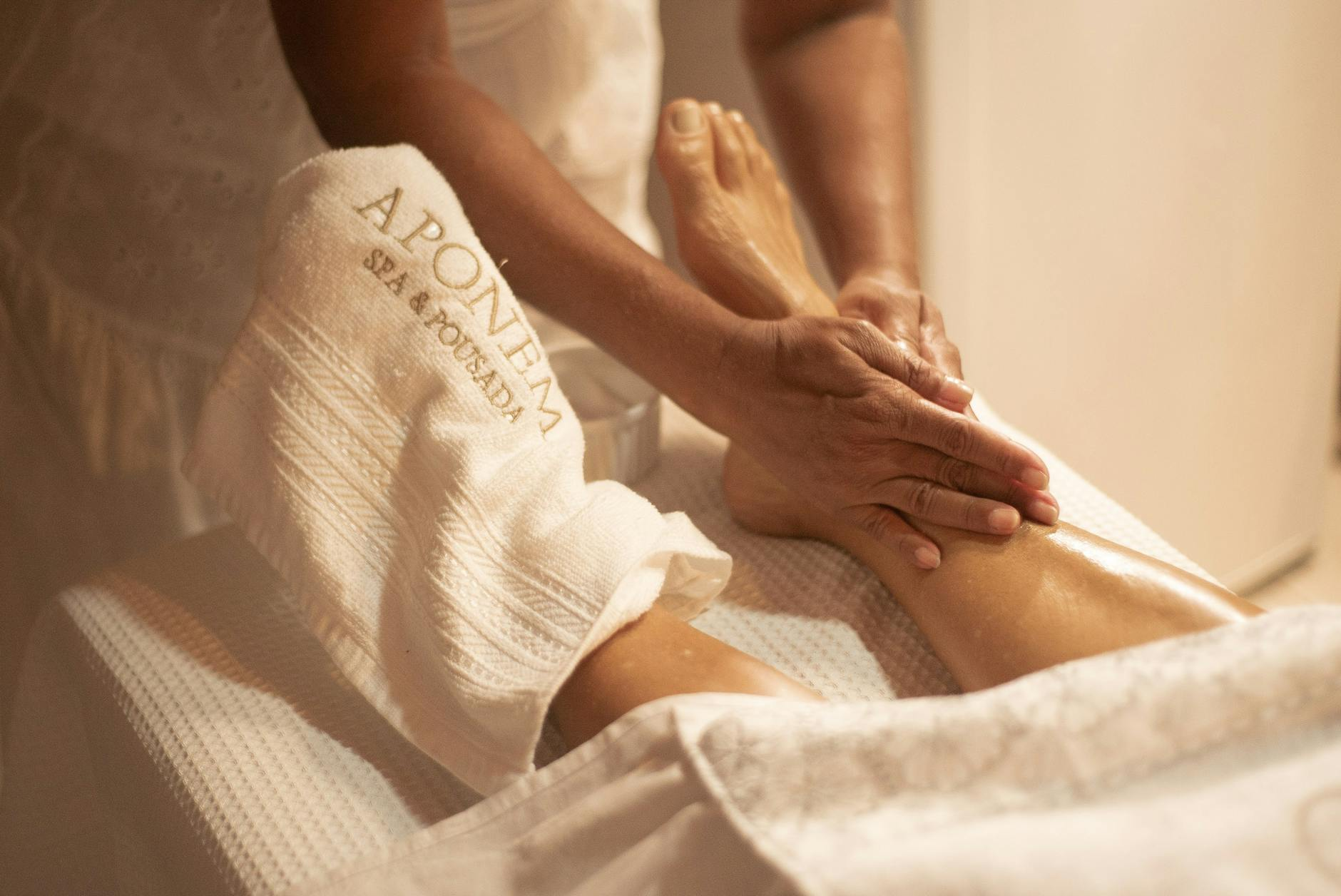
Ayurveda originated in Kerala in a form that is specific to this region — called Keraliya Chikitsa — and has been practiced here continuously for over three thousand years. The vaidyas (Ayurvedic physicians) here are not practitioners who did a certification course. Many come from families where the knowledge has been passed father to son for thirty or forty generations. When the physician at the retreat I visit in Thrissur reads my pulse and adjusts my treatment plan accordingly, he is applying knowledge that his grandfather’s grandfather learned from his grandfather. That is not nothing. That is, in fact, everything.
The landscape also matters. Kerala’s combination of sea, backwaters, forests and mountains creates a biodiversity that provides the raw materials for Ayurvedic treatment in a way that cannot be replicated in a city. The herbs are local, often grown on the retreat property. The oils are pressed from ingredients that have been cultivated here for centuries. The food is Kerala food — which is among the most healing cuisines I have encountered anywhere in the world.
And finally: the pace. Kerala moves slowly. Not in the frustrating way of inefficiency, but in the genuine way of a culture that has decided that speed is not the highest value. When you arrive from the pace of a city — any Indian city, but especially Mumbai or Delhi — the deceleration that Kerala imposes on you is physical. You feel your shoulders drop. You feel your breathing change. You feel, sometimes uncomfortably, all the things you have been outrunning.
What Kind of Kerala Wellness Experience Is Right for You?
Not all Kerala wellness experiences are the same. Before I tell you where to go, it is worth being honest about what you are actually looking for — because the answer changes what you should book.
| What You Want | What to Book |
|---|---|
| Genuine Ayurvedic treatment for a health condition | A proper Ayurvedic hospital or clinical retreat — minimum 7-14 days, overseen by a qualified vaidya |
| Rest, reset and gentle Ayurvedic treatments | A wellness resort with Ayurvedic facilities — 3-5 days, more flexibility, less intensive |
| Digital detox with yoga and nature | A yoga retreat or backwater homestay — can be done in 3-5 days, lower cost, high nature immersion |
| Complete quiet and solitude | A tea estate bungalow in Munnar or Wayanad — no treatments, just silence, walking and extraordinary scenery |
| Backwater slow travel | A houseboat stay in Alleppey combined with village homestays — 3-4 days minimum |
My honest advice: decide before you book. The number of people I have met at intensive Ayurvedic retreats who realised on day two that they wanted a houseboat instead — and vice versa — is significant. Be clear with yourself about whether you want to be treated or whether you want to rest. They are different things and they require different environments.
Where to Go: The Kerala Wellness Destinations I Return To
1. Varkala — The Cliff, the Sea and the Yoga
Varkala is where I went on my first Kerala wellness trip and where I still return when I want yoga, sea and a pace of life that is not quite as hermetically sealed as a full retreat. The town sits on a cliff above a beach that faces west — which means the sunsets are extraordinary and the evenings are long and warm and good for sitting with a coconut water and doing nothing productive.
The yoga scene in Varkala is genuinely good — not the tourist yoga of a beach resort, but teachers who have been practicing for years and who offer classes that are serious and carefully taught. I have had some of my best yoga classes in Varkala, at a small shala above the cliff that has no Instagram presence whatsoever and is better for it.
- Stay minimum 5 nights — Varkala gives its best slowly
- Walk north along the cliff path every morning before the cafés open — the light at 6am is extraordinary
- Ask your guesthouse for a recommendation for yoga rather than booking through a tourist office — the best teachers are found by word of mouth
- The Janardhana Swami Temple at the beach level is one of the oldest in Kerala — worth visiting with respect and without a camera
2. Alleppey (Alappuzha) — The Backwaters and What Stillness Actually Feels Like
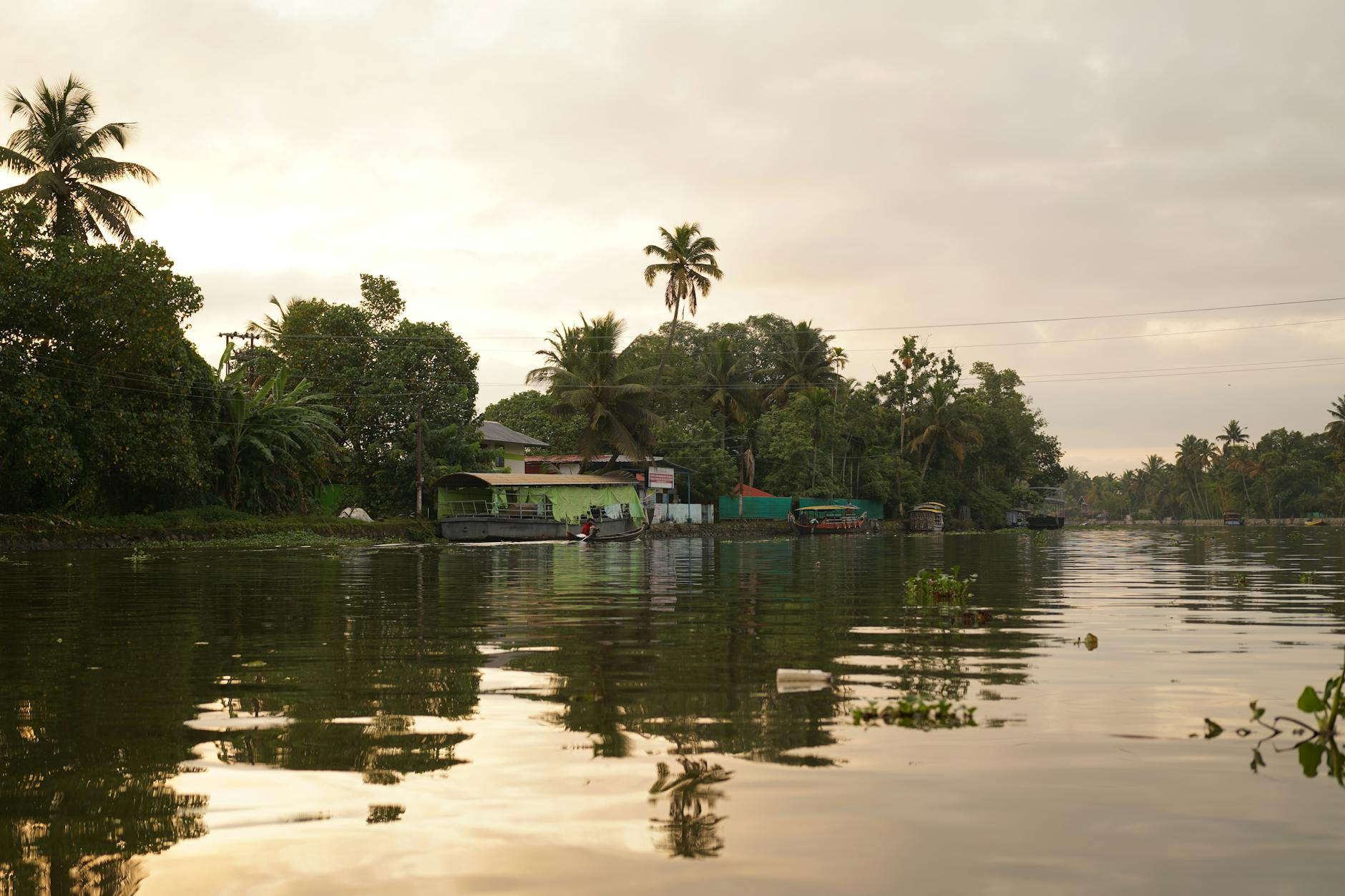
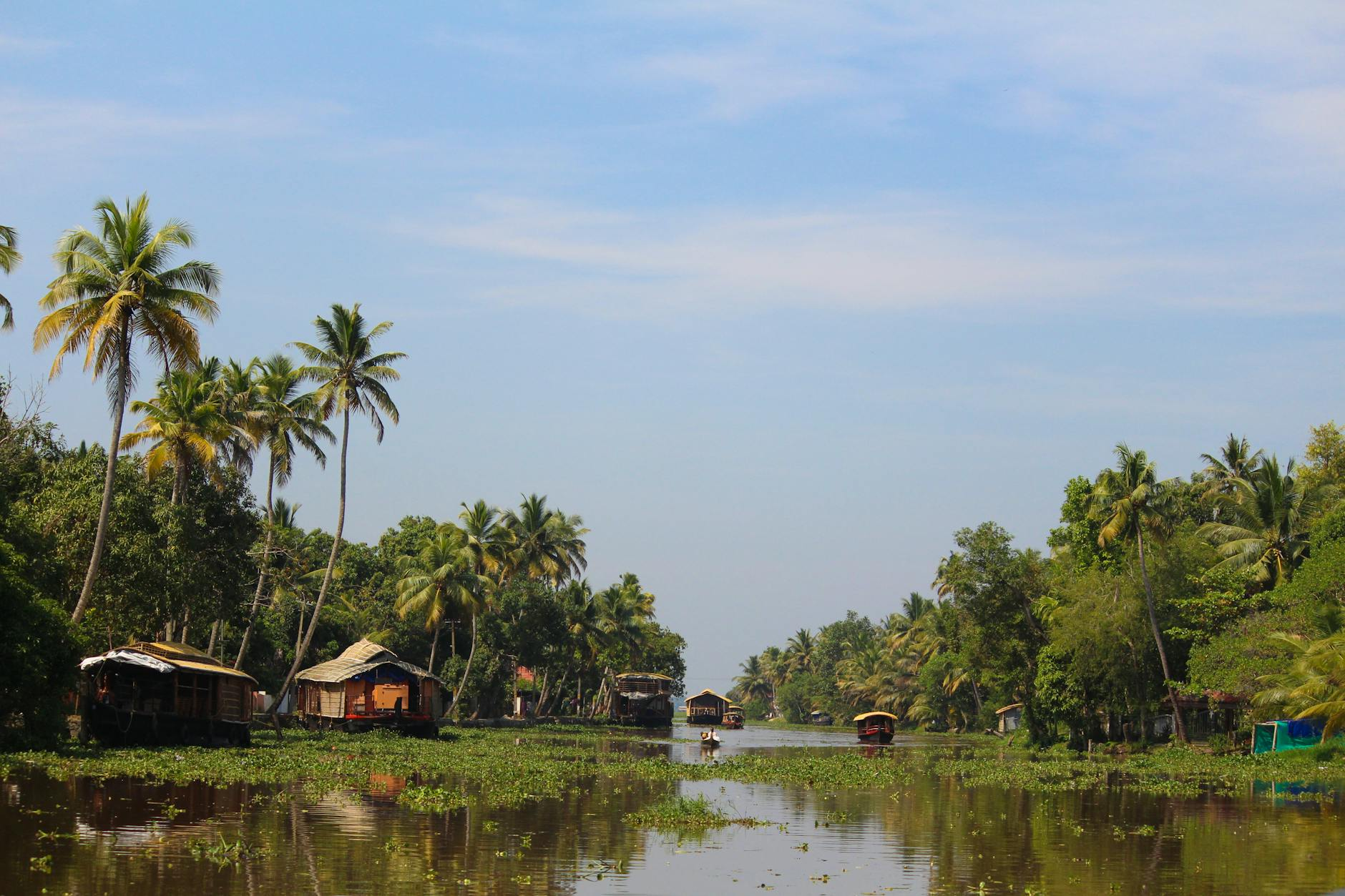
I have stayed on houseboats in Thailand, Vietnam and Kashmir. The Kerala backwaters are different from all of them in a way that is hard to articulate but easy to feel. The network of canals, lakes and rivers that runs through Alleppey district is so extensive and so green and so quiet that after two days on the water you begin to lose track of time in the most pleasant possible sense.
My recommendation is not the large tourist houseboat that fits eight people and has a generator running all night. My recommendation is a small two-bedroom houseboat with a crew of two — cook and captain — that moves slowly through the smaller canals where the large boats cannot go. You wake up to the sound of water birds. The cook makes breakfast from whatever was bought at the village market that morning. Nothing requires your attention. Everything is already handled.
- Book a smaller houseboat (2 bedroom maximum) through a local operator rather than an aggregator — better boats, better crew, more authentic route
- Request the village backwater route rather than the main tourist canal — takes you through rice paddies, toddy tapper villages and morning markets
- Bring books — not a Kindle, actual books. The houseboat is the right place for them.
- Ask the cook to make traditional Kerala meals — karimeen pollichathu (fish in banana leaf), appam with stew, fresh coconut chutney — this food is part of the restoration
3. Thrissur — Authentic Ayurveda Away from the Tourist Circuit
Thrissur is the cultural capital of Kerala and is not, primarily, a tourist destination. This is exactly why I go there for serious Ayurvedic treatment. The retreats here are quieter, the prices are lower, the practitioners are more likely to be from genuine Ayurvedic families and less likely to have calibrated their offering for Instagram.
I have done a seven-day Panchakarma treatment in Thrissur that I count among the most significant health decisions I have made. Panchakarma is the comprehensive Ayurvedic cleansing and rejuvenation programme — not a relaxing massage holiday. It is medically supervised, quite intensive, and involves dietary restrictions and treatments that are sometimes uncomfortable. It is also, for the right person at the right time, extraordinary in its effects.
- Only do Panchakarma at a proper clinical facility with a qualified vaidya — not at a resort offering it as a ‘programme’. The difference matters.
- Budget minimum 7 days, ideally 14 — the full Panchakarma protocol requires time to work
- Follow the dietary guidance completely — the restricted diet is part of the treatment, not optional
- Tell your doctor at home what you are doing before you go — especially if you are on any regular medication
4. Munnar — When What You Need Is Silence and Cold Air
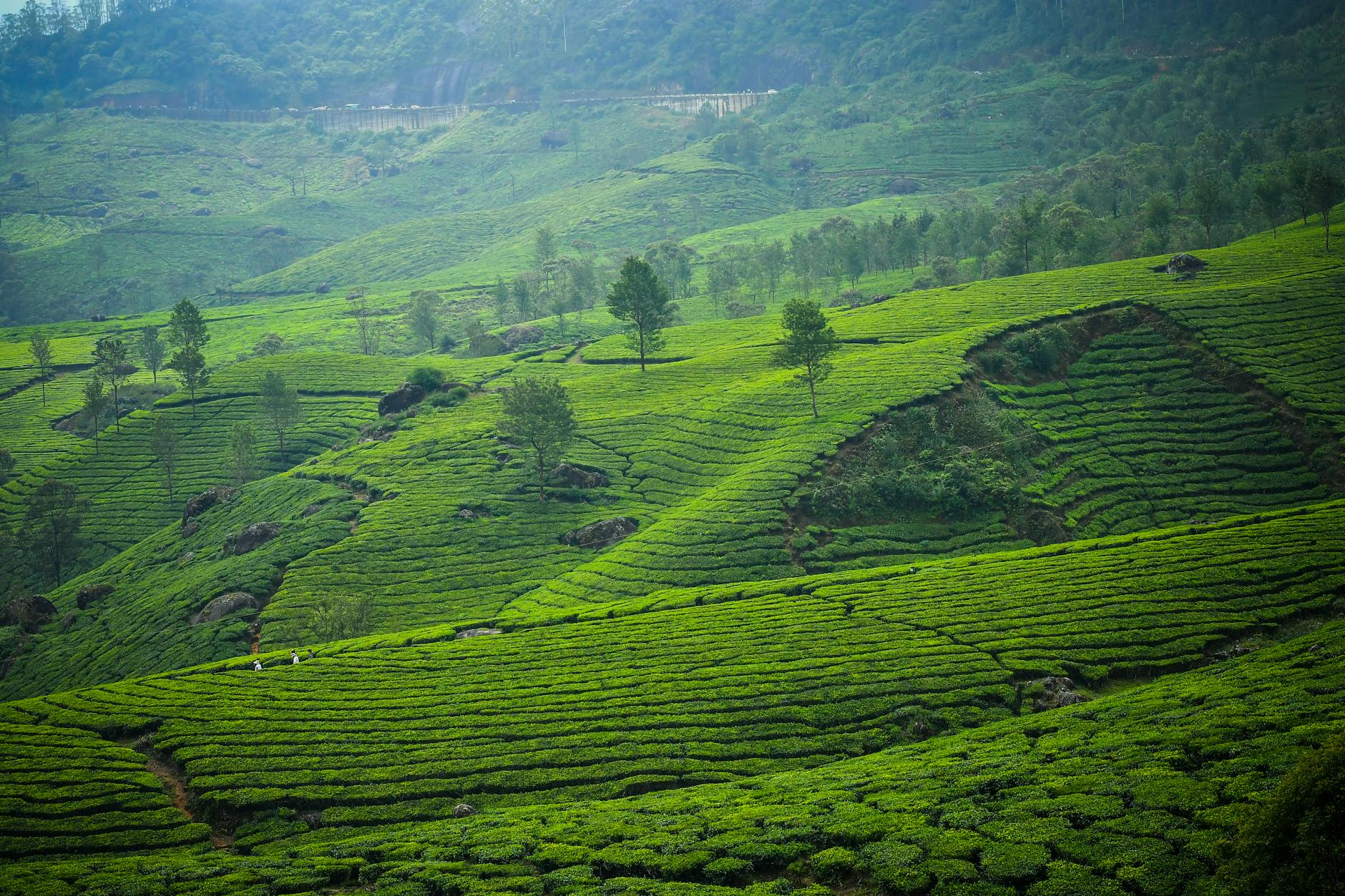
Munnar is at 1,600 metres in the Western Ghats and the air is cool and clean and smells of tea. It is the place I go when what I need is not treatment but simply quiet — when the city has been loud for too long and I need to remember what it feels like to hear only birds and wind and rain on a tin roof.
There are wellness retreats in Munnar but I do not use them. What I use is a small tea estate bungalow — the kind that was built for British planters in the colonial period, that has a fireplace and a verandah and a view of the tea hills in every direction. I bring books. I walk in the morning. I drink the tea that is grown within sight of my window. I sleep more than I think I need to. I leave restored in a way that no treatment has ever quite matched.
- Book a plantation bungalow rather than a hotel — the bungalows are the real Munnar experience, some available for Rs 3,000-6,000 per night
- Walk the tea estate paths at dawn — the mist in the valleys and the green of the tea on the slopes is extraordinary
- Visit a working tea factory and understand what you are drinking — the Tata Tea Museum in Munnar is excellent and honest about the industry’s history
- Do not fill your itinerary — Munnar is for doing less, not more
5. Wayanad — The Forest, the Tribes and the Genuine Wild
Wayanad is the least touristy of the destinations on this list and, for that reason, my current favourite for a real reset. It is a forested highland district bordering Karnataka and Tamil Nadu, home to significant tribal communities and some of the most biodiverse forest in the Western Ghats.
I stay at a small eco-resort near Kalpetta that is run by a couple who moved from Bangalore fifteen years ago to do something that mattered more to them than their corporate careers. The resort employs primarily from the local tribal communities. The food is from their own farm. The activities — forest walks, tribal village visits, night safaris — are done with genuine respect for the ecology and the people. I have stayed there three times and recommended it to more people than I can remember.
- Book eco-stays rather than resorts — Wayanad’s value is its ecology, not its amenities
- Do the dawn forest walk — the birdlife in Wayanad is extraordinary and the light at 6am in the forest is something I cannot describe adequately
- Ask about tribal community visits through your stay — but only if organised respectfully and with community consent, not as a tourist attraction
- Leave your phone on airplane mode for at least one full day — Wayanad forest is the right place to attempt this
The Digital Detox: What Actually Works and What Doesn’t
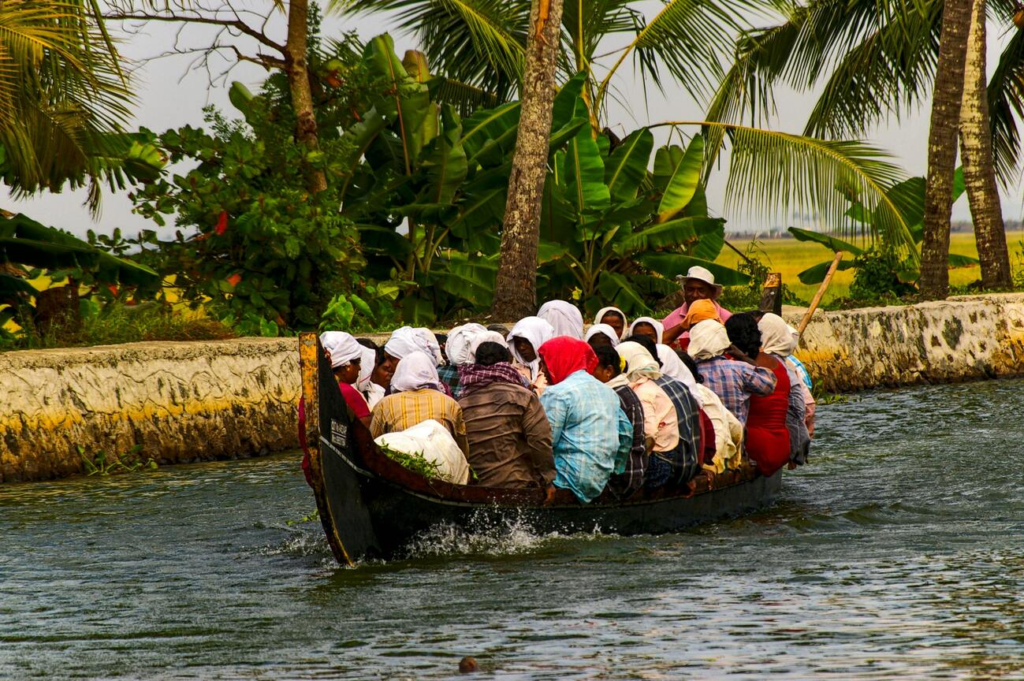
I want to be honest about digital detox because most of what is written about it is either preachy or unrealistic. Here is what I have actually found, after multiple attempts ranging from the disastrous (four hours) to the genuinely successful (eight days):
What does not work
- Going cold turkey on the first day if you are a heavy user — the withdrawal is real and it makes you miserable and worse company
- Choosing a destination with patchy wifi rather than no wifi — patchy wifi is more tempting than no wifi because you spend all your time trying to get a signal
- Telling yourself you will check email just once a day — once a day becomes four times a day by day three
- Bringing your laptop ‘just in case’ — there is no just in case. Leave the laptop.
What actually works
- Reducing gradually for 3-4 days before you go — move to checking email twice a day, then once a day, then not at all. Your nervous system adjusts better with transition.
- Choosing a destination where connectivity is genuinely poor or where the culture discourages it — the backwaters and some Wayanad locations are naturally low-connectivity
- Having a genuine handover plan at work before you go — most digital anxiety is actually work anxiety. Solve the work problem and the phone problem largely solves itself.
- Finding something to do with your hands — walking, cooking, reading physical books, swimming. The phone fills the hands when there is nothing else in them.
- Giving yourself permission to be bored for the first two days — boredom is the gateway to rest. Most of us never pass through it because we reach for the phone instead.
The version of me that lasted four hours on that first Varkala detox was the version that had not solved the work anxiety and had nothing for her hands and was not willing to be bored. The version that managed eight days in Wayanad without her phone had done all three. The destination was less important than the preparation.
Practical Information: Planning Your Kerala Wellness Trip
| Category | Details |
|---|---|
| Best time to visit | October to March — post-monsoon Kerala is lush, cool and at its most beautiful |
| Monsoon season | June to September — many retreats offer special monsoon Ayurvedic programmes (Karkidaka Chikitsa). Beautiful and peaceful if you embrace the rain. |
| How long to go | Minimum 5 nights for any genuine reset. 7-10 days for Ayurvedic treatment. 14 days for Panchakarma. |
| Getting to Kerala | Fly to Kochi (Cochin) for Alleppey, Thrissur and Munnar. Fly to Thiruvananthapuram for Varkala. Train to Kozhikode for Wayanad. |
| Budget range | Backwater homestay: Rs 1,500-3,000/night. Wellness resort: Rs 5,000-15,000/night. Clinical Ayurvedic retreat: Rs 8,000-25,000/night including treatment. |
| What to bring | Loose comfortable clothing, one book per 2 days minimum, a journal, insect repellent for backwaters, layers for Munnar/Wayanad evenings |
What Kerala Has Taught Me About Rest
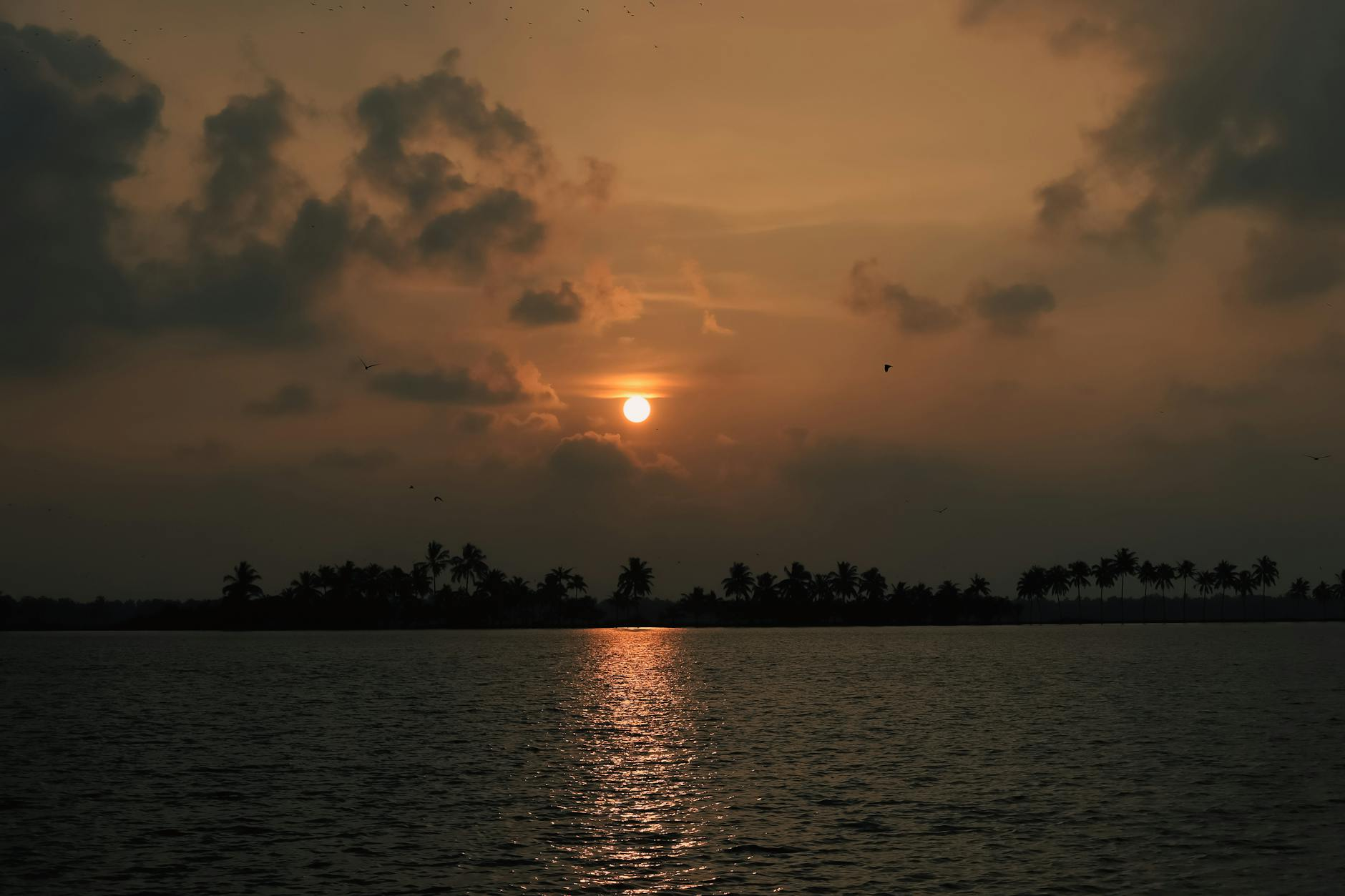
Having broken a world record, authored fourteen books, and spent two decades traveling solo across more than 100 cities globally, I’ve realized something vital. One of the most important things I have learned—and the very thing that has made everything else possible—is how to actually rest.
Not to be on holiday. Not to be busy with a different kind of busyness. To actually stop. To let the body recover, the mind clear, the nervous system return to something approaching its baseline. This is harder than it sounds for most of us who have been trained to equate productivity with value. It requires practice. It requires the right environment. And for me, more than anywhere else I have found in the world, Kerala provides that environment.
The backwaters slow you down whether you want them to or not. The Ayurvedic practitioner treats your body as something that knows more than your mind. The forests of Wayanad ask nothing of you except your presence. The tea hills of Munnar remind you that some things grow slowly and are better for it.
I came back from my last Kerala trip — seven days in Thrissur followed by three days on the backwaters — and wrote more clearly and more freely than I had in six months. Not because I had worked harder on the trip. Because I had, for the first time in a long time, genuinely stopped working. Kerala made me stop. And the stopping, as it always does when we finally allow it, made everything that came after better.
Go. Turn off the phone. Let Kerala do what it has been doing for three thousand years.
“The rest that Kerala offers is not the rest of doing nothing. It is the rest of being fully present in a place that asks nothing of you except your attention. That is the hardest kind to find, and the most restorative.” — Shivi Goyal
💌 Have you done a wellness retreat or digital detox in Kerala — or anywhere? I want to know what worked and what did not. Tell me in the comments below. And subscribe to Spirited Blogger for weekly travel stories and guides from someone who is still, honestly, learning how to rest.
Useful Resources:
Also read on Spirited Blogger: